

The Rise of Baltic Quiet Luxury: Why Design Cabins are the New Five-Star Hotels (2026)
Key Takeaways
- Estonia (54%) and Latvia (53%) rank among Europe’s most forested nations — more than 15 percentage points above the EU average (Eurostat, 2023)
- Luxury travelers shifted their spending on experiences from 34% in 2019 to 46% by 2023, outpacing goods (McKinsey, 2024)
- Europe’s glamping market reached USD 1.28 billion in 2024, growing at 8.5% per year — with cabins holding the largest revenue share (Grand View Research, 2024)
- Wellness travelers represent 7.8% of all trips but generate 18.7% of all tourism expenditure (Global Wellness Institute, 2024)
- Three standout 2026 properties: Sidrabgrava (Latvia), Maidla Nature Resort (Estonia), Blackview (Lithuania)
The gold-plated hotel era is over. Luxury travelers have shifted their spending from goods to experiences — rising from 34% of spend in 2019 to 46% by 2023, according to McKinsey. And the most coveted experience now is not a marble lobby or a Michelin-starred restaurant. It is 53 hectares of Latvian pine forest, a private sauna, and complete silence. The Baltics — Latvia, Estonia, Lithuania — have become the epicenter of this shift. A new category of accommodation has emerged here that outperforms traditional five-star hotels on every metric that actually matters.
Why Are 2026 Travelers Choosing Design Cabins Over Hotels?
Discerning travelers are choosing design cabins because the post-pandemic shift toward nature, privacy, and intentional space never reversed — it deepened into a structural change in what luxury means. Europe’s glamping market reached USD 1.28 billion in 2024, growing at 8.5% annually, with cabins and pods commanding 45% of all revenue, according to Grand View Research. The reason is straightforward: a cabin in the forest delivers solitude, architecture, and natural immersion that no hotel can replicate at any price point.
Travelers with real purchasing power no longer want what money could always buy. They want what it rarely could: genuine solitude, architectural intention, and nature at arm’s length.
Baltic design cabins deliver precisely this. They are architect-considered, editor-curated, and radically private.
No shared dining rooms. No lobby music. No “wellness journey” brochures.
Just space. Silence. And the kind of design that earns its place by disappearing into the landscape.

What Defines Quiet Luxury in the Baltics?
Quiet luxury in the Baltics is defined by three things: architectural integrity, genuine privacy, and proximity to unspoiled nature. It rejects surface-level opulence — marble, gold accents, status signaling — in favor of materials and spaces that age with dignity. Think private saunas built into the forest edge, hot tubs positioned under open sky, and interiors where the wood grain is the decoration. The region’s design culture, rooted in Scandinavian restraint and a deep relationship with forest landscapes, produces properties where nothing feels accidental.
It means materials chosen for how they age, not how they photograph. Natural wood, raw stone, linen. Spaces that breathe.
It means amenities that serve the body without announcing themselves. A private sauna built into the forest edge. A hot tub positioned toward a treeline, not a camera angle.
It means the host has considered every detail — and then removed everything unnecessary.
Baltic design cabins embody this philosophy more purely than almost anywhere else in Europe. The region’s culture of closeness to nature, combined with a generation of internationally trained architects, has produced properties that feel both inevitable and rare.
Why the Baltics Lead Europe in Nature-Luxury Stays
The Baltic region’s competitive advantage in nature-luxury is structural, not accidental — Estonia and Latvia each have more than 53% of their land covered in forest, making them among Europe’s most forested nations, according to Eurostat’s 2023 data. Latvia recorded 2.7 million tourist arrivals in 2024, up 10.9% on 2023. Estonia welcomed 3.6 million visitors in the same period, with foreign arrivals rising 11%, according to Statistics Estonia. The conditions that make great nature-luxury possible — space, silence, and scenery — are structurally abundant here.
The design talent emerging from Riga, Tallinn, and Vilnius rivals anything Scandinavia has produced. And wellness travel — which accounts for 18.7% of all global tourism expenditure despite representing just 7.8% of all trips, according to the Global Wellness Institute — skews toward exactly the kind of private, nature-embedded experience these properties offer.
The infrastructure is modern. The crowds are absent. And the prices, relative to comparable properties in France or Italy, remain exceptional.
This is not a trend. It is a permanent reorientation of what luxury means.

Three Baltic Sanctuaries Worth Your Attention
The three properties below represent the current editorial standard at Wilderio: architect-designed, privately set, and verified against consistent quality criteria. Each offers something the others do not — together they cover the full spectrum of what Baltic quiet luxury looks like in 2026.
Sidrabgrava Cabin — Vidzeme, Latvia
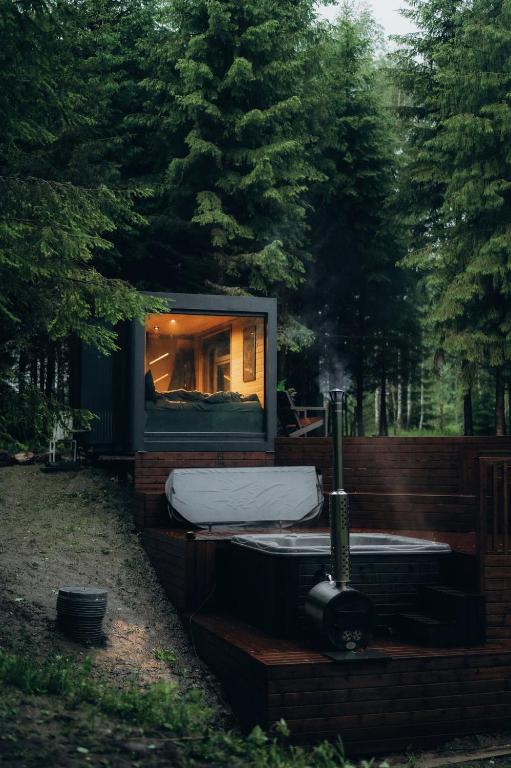
Deep in the forests of Vidzeme, Sidrabgrava operates at a frequency most accommodations cannot reach. The cabin is a study in earned comfort — raw wood interiors absorb the diffused light of northern Latvia, a private hot tub occupies a clearing in the trees, and the sauna is there when you want it, the fireplace when you don’t.
Highlights:
- Luxury air-conditioned cabin with considered interior design
- Private forest hot tub positioned for full sky exposure
- Sauna, fireplace, and sun terrace for all-season use
- Fully equipped kitchen and private modern bathroom
- Lake views and a surrounding garden for morning walks
- Pet-friendly, with free private parking
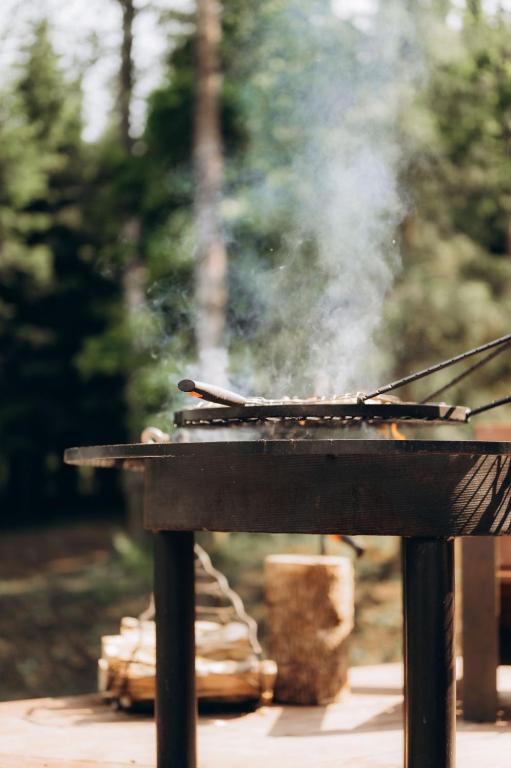
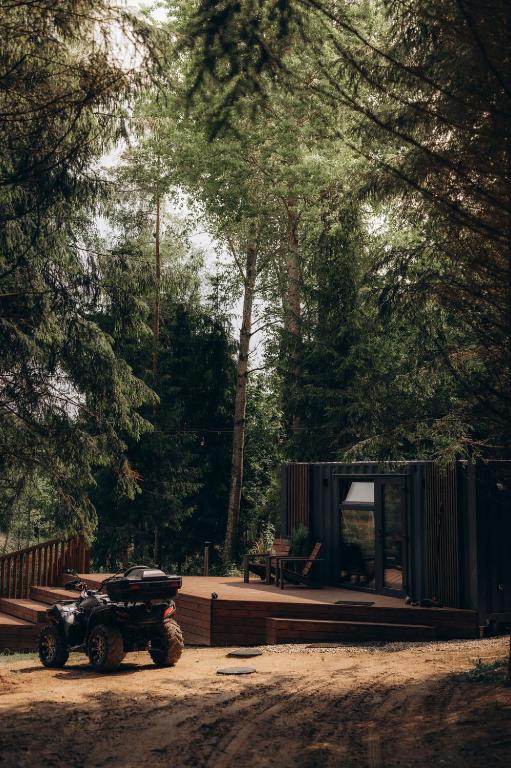
Mornings begin with coffee on the sun terrace, the air carrying pine and damp soil. Afternoons dissolve into forest walks or quiet hours beside the fire. Evenings belong to the hot tub and the Latvian sky above it.
From €160/night. Rated 9.4 by guests.
Maidla Nature Resort — Rapla County, Estonia
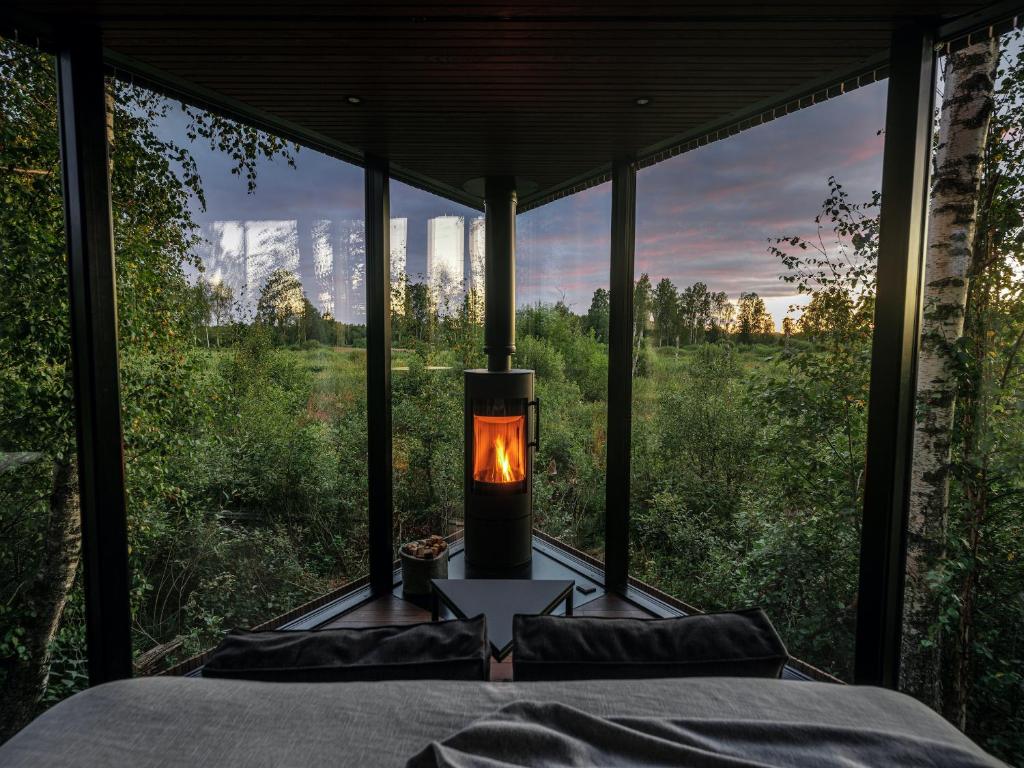
Maidla occupies a register that very few European properties achieve: resort-level amenities delivered at the scale of a private villa. Positioned on the forest edge of Rapla County — 55 kilometres from Tallinn, a city that welcomed over 3.6 million tourists in 2024 — it offers complete withdrawal without sacrifice. The design language is cool, precise, and Estonian.
Highlights:
- Private sauna and plunge pool within the villa footprint
- Outdoor fireplace and sun terrace for year-round use
- On-site restaurant serving refined local cuisine
- Bar, yoga classes, and a balcony with forest views
- Air-conditioned interiors with a well-appointed kitchenette
- Hot tub and comprehensive wellness infrastructure
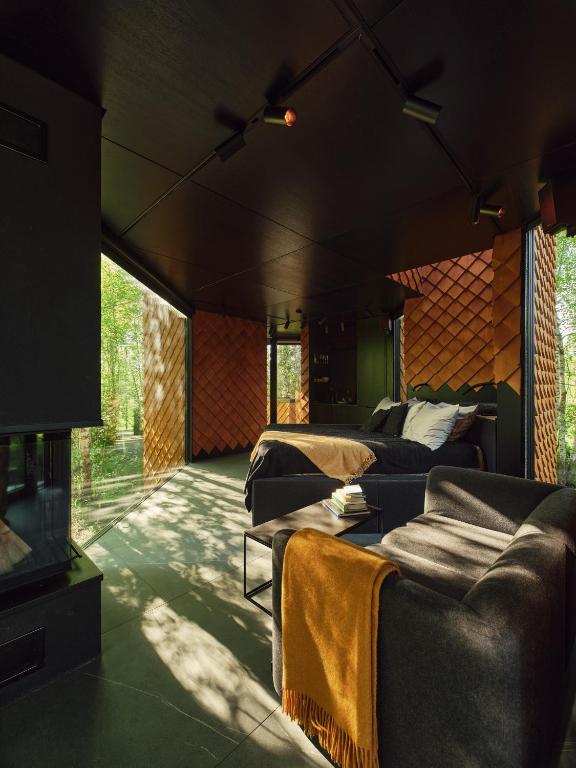
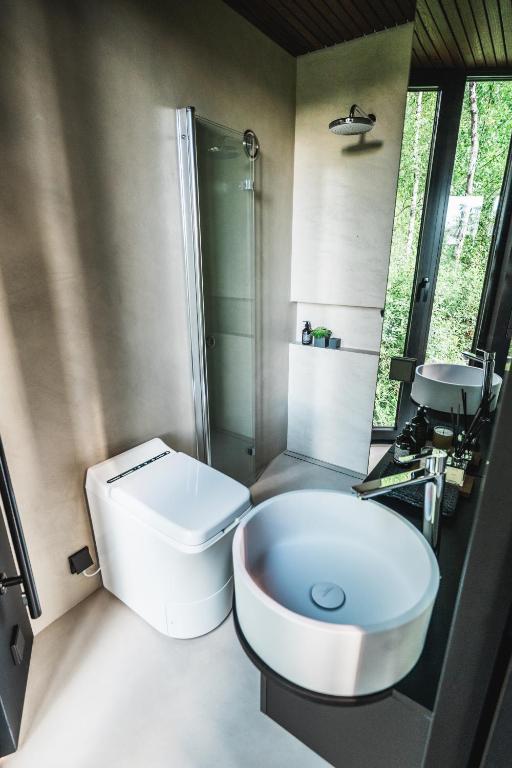
Expansive windows frame the treeline. Raw textures meet crisp linens. The service — present but invisible — anticipates without intruding.
From €320/night. Rated 9.5 by guests.
Blackview Cabin — Kaunas County, Lithuania

Blackview earns its name through architectural conviction. Dark timber cladding against the Lithuanian forest — a design that refuses ornament and relies entirely on proportion, material, and placement. Located 33 kilometres from Kaunas Airport in the quiet of Kulautuva, this is a cabin built around the radical premise that silence is the amenity.
Highlights:
- Minimalist dark-timber architecture with precise interior detailing
- Private terrace with outdoor seating set against forest backdrop
- Fully equipped modern kitchen for complete autonomy
- Parquet floors, dressing room, and air conditioning throughout
- Free WiFi and private parking included
- Sleeps up to 3 guests


The rhythm at Blackview is self-determined. Days unfold at the pace you set. Forest walks, unhurried meals, afternoons with a book. The cabin asks only one thing of its guests: slow down enough to notice what the silence contains.
From €160/night. Perfect score — 10/10 rated by guests.
Frequently Asked Questions
What makes Baltic design cabins “quiet luxury”?
Quiet luxury in the Baltics is defined by three things: architectural integrity, genuine privacy, and proximity to unspoiled nature. It rejects surface-level opulence — marble, gold accents, status signaling — in favor of materials and spaces that age with dignity. Think private saunas built into the forest, hot tubs positioned under open sky, and interiors where the wood grain is the decoration. The Baltic region’s design culture, rooted in Scandinavian restraint, produces properties where nothing feels accidental and nothing announces itself.
Why are the Baltics specifically well-suited to nature-luxury travel?
Estonia and Latvia each have more than 53% of their land covered in forest — placing them among the most forested nations in Europe, according to Eurostat’s 2023 data. The region combines that natural density with modern infrastructure, low tourist volume relative to Western Europe, and internationally trained architects. Latvia saw arrivals grow 10.9% in 2024; Estonia grew 5%. The conditions that make great nature-luxury possible — space, silence, scenery — are structurally abundant here in a way they are not in France, Italy, or the UK.
Are Baltic design cabins suitable for remote work or long-term stays?
Yes. Baltic design cabins are exceptionally well-suited to extended stays. Most are equipped with fully stocked kitchens, reliable high-speed WiFi, and private outdoor spaces — the practical infrastructure for working and living remotely. The pace these properties encourage is particularly restorative over a week or more. Sidrabgrava and Blackview both offer complete kitchen autonomy. Maidla adds on-site dining for evenings when cooking is not the priority. Many guests arrive for a weekend and return for a week.
How does Wilderio select which properties to feature?
Wilderio curates each property against a consistent editorial standard: architectural intention, genuine privacy, verified guest ratings, and natural setting quality. Properties are not accepted based on commercial arrangements. The goal is to surface the top tier of nature-luxury stays across Latvia, Estonia, and Lithuania — not to aggregate everything available. Each listing connects to the property’s verified booking platform with transparent pricing. Wilderio does not mark up rates.
Is Baltic quiet luxury travel suitable year-round?
Yes, and the shoulder seasons make a compelling case. Latvian and Estonian forest landscapes shift dramatically across seasons: summer birch light, autumn amber, winter snow-silenced pines. All three properties featured here operate year-round. Sidrabgrava’s hot tub and sauna are built for cold-weather use. Maidla’s covered outdoor fireplace extends the terrace season into October. Blackview’s insulated dark-timber construction holds heat efficiently through Baltic winters.
Where to Begin
The Baltic cabin landscape is expanding quickly. New properties open each season. Standards are rising — and 76% of travelers now say they want accommodation options that are more sustainable and nature-embedded, according to a 2023 Booking.com survey of 33,000+ travelers in 35 countries, cited by the World Economic Forum.
The three sanctuaries above represent the current editorial standard at Wilderio: properties where design, privacy, and natural setting converge without compromise.
Travelling with a dog? See our guide to pet-friendly glamping in the Baltics — several of these design cabins welcome four-legged guests.
Start with one. The region has a way of making you plan the next before you have left the first.
Discover more Baltic design cabins at Wilderio.
